
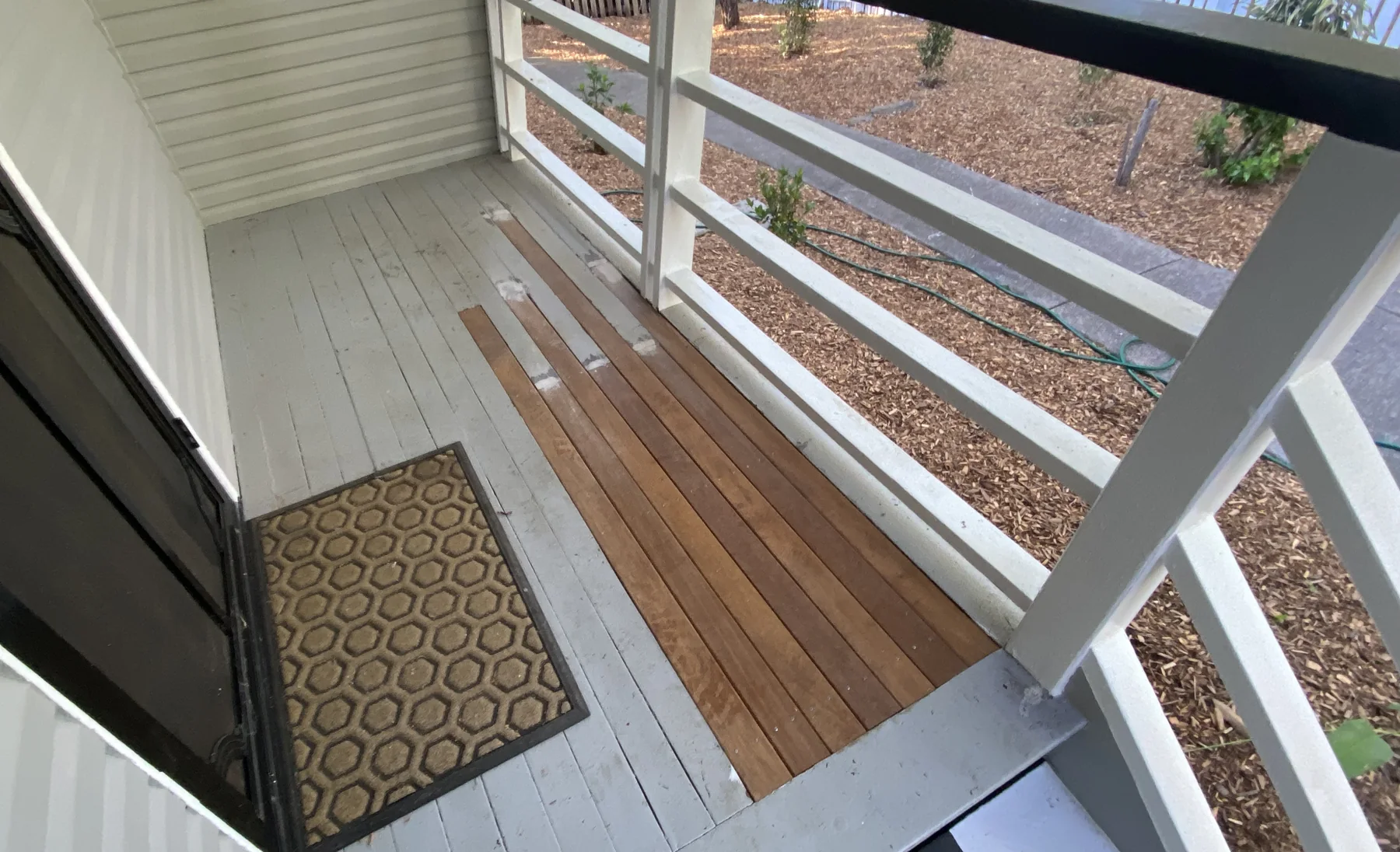
Deck Repair in Smithtown, NY
Wobble, soft spots, a rail that gives when you lean on it. We find what is actually wrong underneath, price it in writing, and fix it.
We Look Under the Deck First
Nearly every deck complaint that starts on the surface finishes somewhere else. A bouncy board is usually a joist. A wobbly rail is usually its post connection. So the inspection starts underneath.
Probed, Not Glanced At
An awl goes into posts, joists, stringers and guard posts. Rotted wood gives under the point, and it often looks fine from above.
Ledger Opened Up
Where the ledger is suspect we open the flashing line and check the band joist behind it, because that is where the load actually lands.
Guard Posts Load-Checked
A guard has to resist two hundred pounds pushed sideways at the top rail. A notched four-by-four often cannot, and that is fixable hardware.
Pier Movement Traced
Racking and a sloping surface usually trace back to piers that never reached three feet and have been riding the frost.
Stair Geometry Measured
The largest and smallest riser in a flight cannot differ by more than three eighths of an inch. Bottom steps fail this constantly.
Written Before Started
You get the findings and the price on paper before a tool comes out, including the parts we recommend leaving alone.
How a Repair Gets Handled
Inspection, findings, written price, then the work, with the structural items separated from the cosmetic ones.
Inspection
We work the whole structure with an awl: footings and posts, beams and joists, the ledger, the guards and every stair stringer.
Findings
You get a plain list split into what is structural, what is cosmetic and what can wait another season.
Written Price
Line by line, so you can approve part of it and defer the rest.
Repair
Members replaced rather than patched where the rot is bigger than a thumb, then the whole structure rechecked.
The One Connection That Decides a Deck
The ledger, the board bolted to the house, carries about half the deck's load into the building, and it is where deck failures concentrate.
- Why it mattersFrank Woeste, the Virginia Tech professor whose research with Joseph Loferski produced the ledger bolting schedules later written into the model code, has said he believes roughly ninety percent of deck collapses come from a failed ledger connection, most of them nailed only.
- The slow versionMissing flashing does the same damage quietly. Water gets behind the ledger, the sheathing and band joist rot, and the bolts end up gripping wood that is no longer there.
- What we checkFastener type and pattern, whether flashing is present, whether the band joist behind probes solid, and whether the ledger was bolted to structure or to brick veneer.
- The veneer trapA ledger fixed to stone or brick cladding is not a repairable condition. Veneer is a finish, not structure, and it cannot carry deck load.
- The redundant fixBoth researchers recommend an independent support system next to the house, treated posts carrying the vertical load, so the deck does not depend on the ledger alone.
What Usually Fails on a Smithtown Deck?
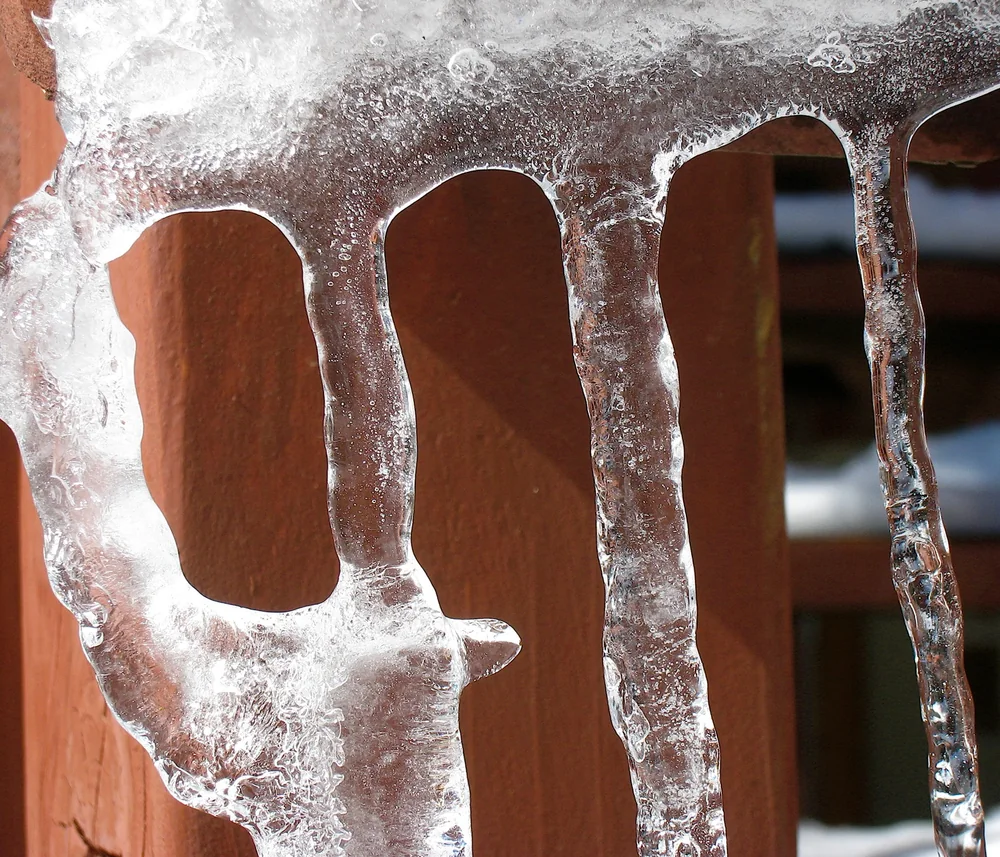
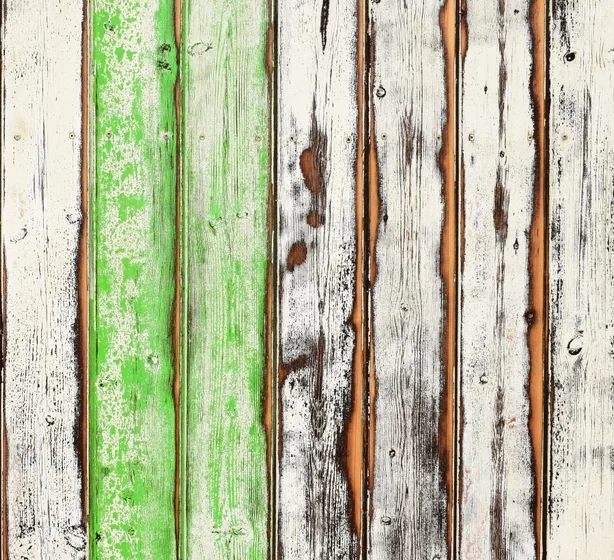
Three things, and the climate drives all of them. Frost is first: with a three-foot design depth, any pier that stopped short rides the freeze-thaw every winter, and the deck racks a little further each year. Water is second, and it collects where boards meet joists and behind an unflashed ledger, which is why the substructure often fails before the surface looks bad. Salt is third, and along the Sound shore it works on fasteners and connectors rather than on wood. We repair frames, posts, ledgers, guards, stairs and piers, and we say when a repair is not the right answer.
- ✓ Rot found by probe
- ✓ Ledger and flashing work
- ✓ Frost-heaved pier resets
- ✓ Guard post hold-downs
- ✓ Stair riser corrections
- ✓ Corroded hardware swapped
Repair or replace, by symptom
| What you are seeing | What it usually means |
|---|---|
| Cupped or split boards over a solid frame | Resurface: strip, inspect, tape, re-deck |
| A soft patch smaller than a thumb | Repairable: cut out and treat with preservative |
| Soft support post at the base | Replace the member, and check the pier under it |
| Rot in a joist or beam | Replace the member, not a sistered patch |
| Rot in the ledger or band joist | Structural: the deck comes off the house |
| Deck racking or sloping away | Pier depth and lateral anchorage, not the boards |
| Guard that moves when leaned on | Post-to-frame connection, usually a hardware fix |
| Bottom step taller than the rest | Stair geometry corrected at the landing |
| Rust streaks around fasteners | Wrong metal for the wood or the exposure |
| Ledger bolted to brick veneer | Not repairable as built |
Deck Services in Smithtown, NY
Six lines of work, all run by the same crew: new builds, full replacements, composite, repairs, refinishing and railings.
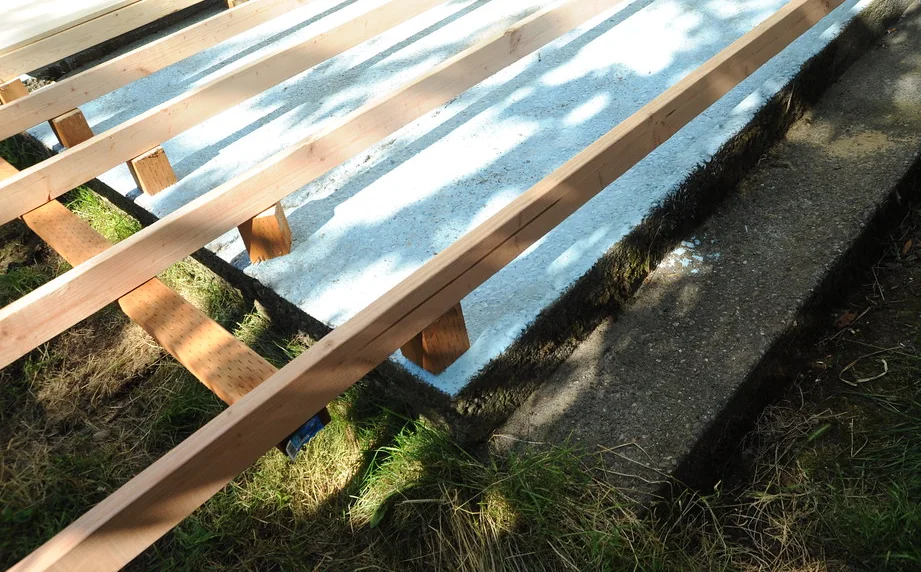
Deck Building
New decks framed, flashed and built to what the town's plan review asks for.
Learn more →
Deck Replacement
Full teardown and rebuild when the frame, not just the surface, has reached its limit.
Learn more →
Composite Decking
Capped composite and PVC boards installed to the board maker's own gapping rules.
Learn more →
Deck Repair
Rot, wobble, loose ledgers and frost-heaved piers found, priced and put right.
Learn more →
Deck Staining
Cleaning, brightening and refinishing on a moisture reading, not a calendar date.
Learn more →
Deck Railings
Wood, composite, aluminum and cable systems, with the posts anchored to take the load.
Learn more →Deck Work Across the Town of Smithtown
Coverage runs the whole Town of Smithtown and past its edges, from Fort Salonga down to Ronkonkoma and east to Stony Brook. Kings Park, St. James and Nesconset are short runs. Prices go in writing first, and a job at the far end of the map costs what one down the road costs.
Deck Repair in Smithtown
Get It Looked At
Describe what the deck is doing and roughly when it was built. If it is a twenty-minute fix we will say so on the phone.